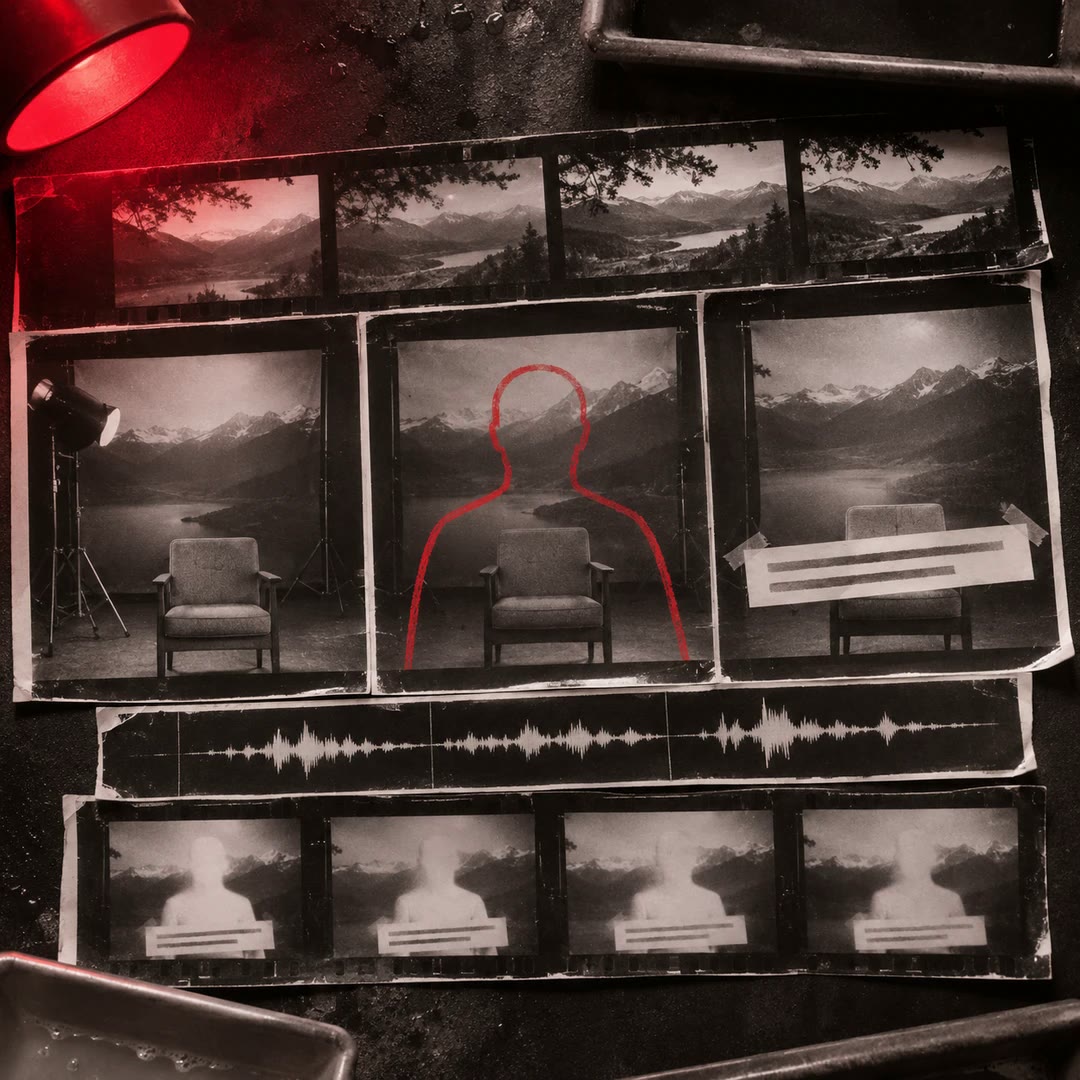
Log burned-in subtitles with AI
Create a frame-referenced inventory of dialogue subtitles visible in the picture, with a visual check for each transcription and timing boundary.
Post-production teams can log burned-in subtitles with AI when an authorised master contains dialogue text in the picture instead of a separate subtitle track. The forced-narrative-exact skill finds candidate frames, assists boundary refinement and prepares records for visual approval.
A master may contain both a texted pass and a matching textless pass. Comparing the two can reveal brief captions missed by a sampled scan, but only after a reviewer establishes that their frames align. The report distinguishes the source timecode from the file’s relative position.
What it does
- Scan the appropriate picture band for possible dialogue captions.
- Read the actual on-screen wording and verify it against retained frames.
- Refine the first displayed frame and exclusive end boundary.
- Separate repeated texted and textless material within a master.
- Deliver a cue inventory and record limitations in the completeness check.
Install and use
- Install the skill with Python, uv, FFmpeg, ffprobe and Tesseract. Use media you may transcribe and a vision-capable reviewer authorised to see the frames.
- Ask “Log the burned-in dialogue from this master, including the exact wording and source timecode for each cue.”
- Inspect brief and ambiguous captions manually. Use a textless comparison only when the reference is genuinely frame aligned.
FAQ
Source
Made by timelapsetech. Original skill: forced-narrative-exact, published on GitHub under the MIT licence.
View on GitHubRelated products
- SkillNew
Edit English and Thai demo videos with AI
Prepare editable FCP7 XML timelines and English/Thai caption images from your footage, then finish and export in your video editor.
Free - SkillNew
Prepare Amazon videos with AI
Inspect a video for its selected Amazon placement, review evidence frames and reports, and deliberately export a corrected MP4 when useful.
Free - SkillNew
Compose a talking-head video with AI
Combine prepared landscape footage, subject masking, timed text and premixed audio into a reviewed talking-head export.
Free