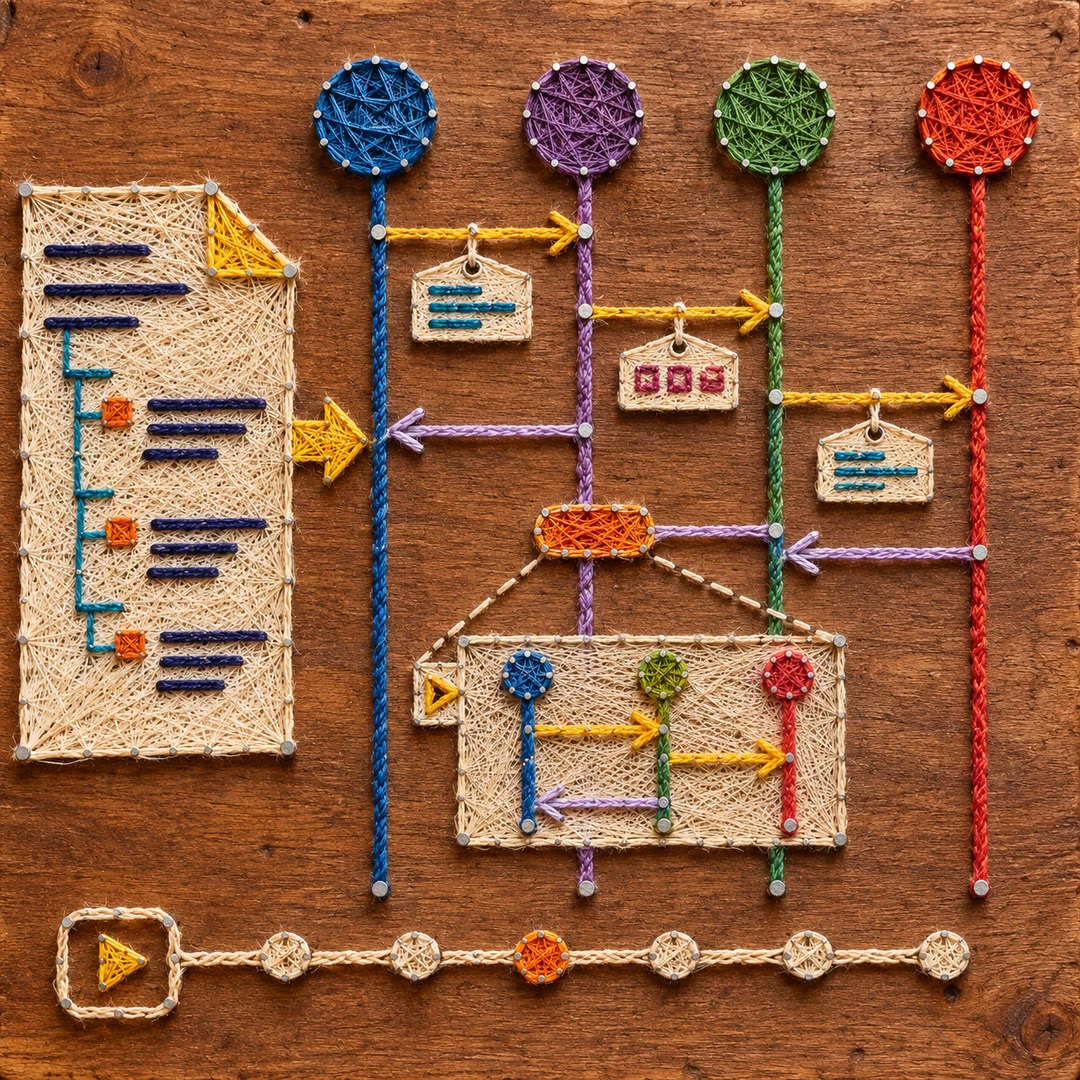
Design print-ready SVG diagrams with AI
Build a figure for its actual page width and check that labels, boundaries and relationships remain legible in greyscale.
Design print-ready SVG diagrams with AI when two boxes that look obviously different on screen become the same grey on paper. The svg-diagrams skill helps an agent work within the document’s physical dimensions and use more than colour to communicate categories. A line pattern or a short label can carry a distinction that hue cannot.
Start by asking what relationship the drawing will reveal. A feedback loop in an approval process benefits from a diagram. Four unrelated requirements may be clearer as a list. Once the drawing has a purpose, the maker’s checker can inspect both its declarations and the pixels it renders.
What it does
- Choose a flow, cycle or layered diagram to fit the material.
- Set the figure to the intended text width.
- Differentiate similar grey fills through shape, line or labels.
- Check that text and arrowheads remain inside the drawing area.
- Inspect the actual rendered result for missing or invisible marks.
Install and use
- For the full checks, use the maker’s official book project with its local bookkit tools and Chromium. Supply the target page dimensions and authorised diagram content.
- Ask, “Draw the approval and revision loop for this column. Make the return route readable without colour and check the rendered figure.”
- Inspect it at final print size and follow the arrows as a first-time reader would.
FAQ
Source
Made by Swift Ugandan. Original skill: svg-diagrams, published on GitHub under the MIT licence.
View on GitHubRelated products
- SkillNew
Create interactive diagrams with AI
Turn a process description into an editable HTML diagram with animated connections, detail windows and a switch for planned parts.
Free - SkillNew
Draw data flows with openhop and AI
Describe a sequence in YAML and inspect it in a local step-through renderer, with messages, example data and expandable sub-flows.
Free - SkillNew
Create Chinese Xiaohongshu posts with AI
Arrange Chinese text into coordinated cover and content cards, then render and inspect PNGs from editable HTML templates.
Free