Compose an editable MIDI track with AI
Draft melody, chords and rhythm as separate MIDI parts, then choose sounds and polish the arrangement in your own music software.
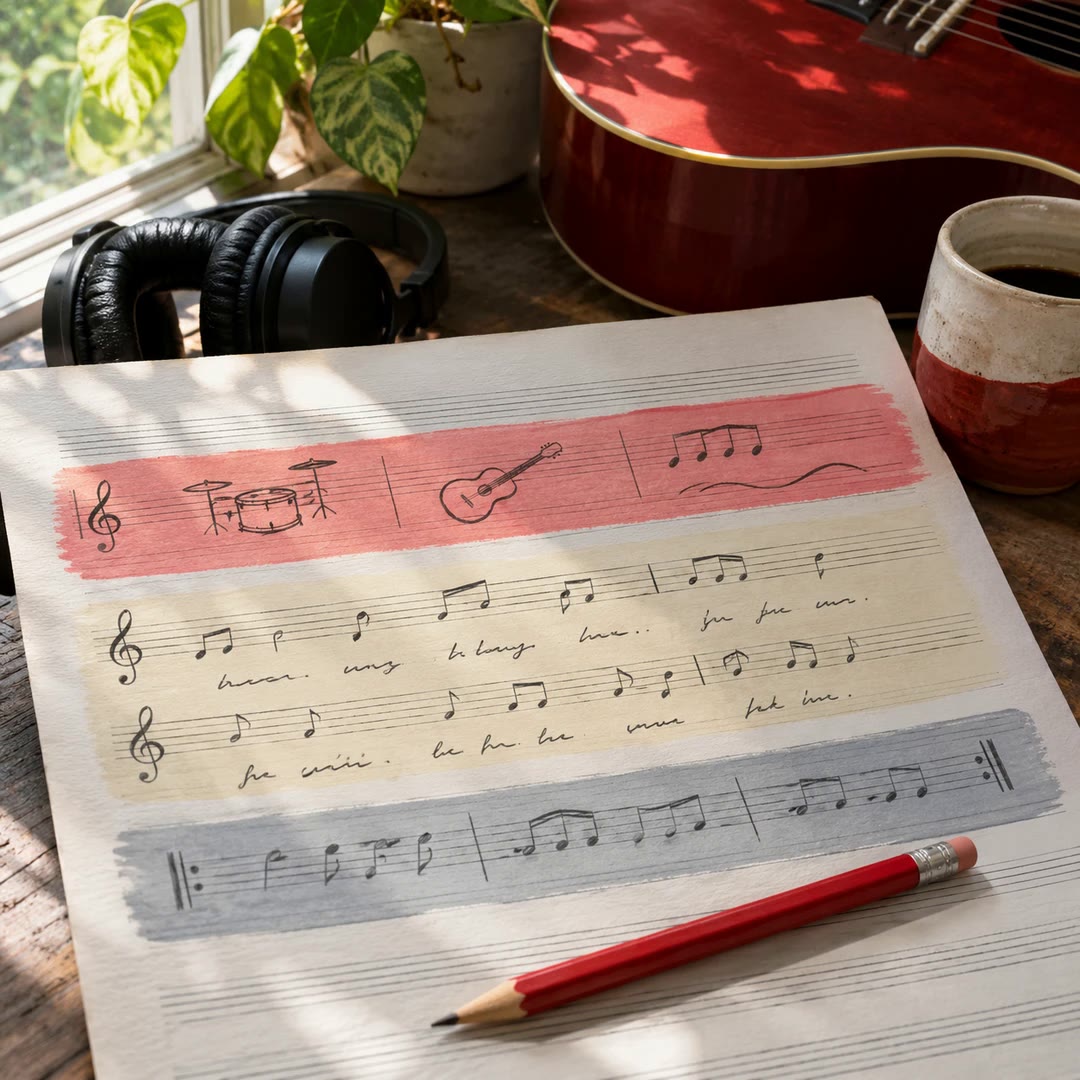
Compose an editable MIDI track with AI when you need an arrangement you can take apart. A short walk-on cue might begin with a bass figure, bring in a chord pattern on the second pass and leave space before the final beat. The music-composer-skill package arranges these ideas in Python and writes a standard MIDI file. Each part remains available to move or revoice in a music editor.
Ask for musical decisions you can hear: how many bars the introduction lasts, where the pulse changes, or when the melody returns. The bundled checker can flag notes beyond a section boundary and conflicting MIDI channels. Audition the export through an instrument you know before choosing sounds for the finished piece.
What it does
- Sketch the melody and accompaniment on separate tracks.
- Reuse a short pattern in a verse or a later return.
- Specify a drum pattern and vary its last bar before a transition.
- Check for out-of-range notes, overlaps and sections that run too long.
- Swap the instrument used to audition a part without rewriting its notes.
Install and use
- Use Python and the supplied library, with a MIDI-capable music editor available for playback.
- Describe the cue length, instruments and where the arrangement should change.
- Check the composition from a trusted local song script, export the MIDI and audition it in your editor.
FAQ
Source
Made by bluenekozkm. Original skill: music-composer-skill, published on GitHub under the Apache-2.0 licence.
View on GitHubRelated products
- SkillNew
Track album progress with AI
Review track status, workflow stages and blockers in a structured text report
Free - SkillNew
Write music prompts with AI
Shape a musical brief into a prompt for the chosen generator, placing style, lyrics and section cues in the appropriate fields.
Free - SkillNew
Practise guitar tabs with AI
Turn a guitar score into an interactive practice page with slower playback, selected-bar loops and a source image for checking the transcription.
Free