Compare options with AI
Compare work options against explicit criteria, explain trade-offs and identify what could change the recommendation.
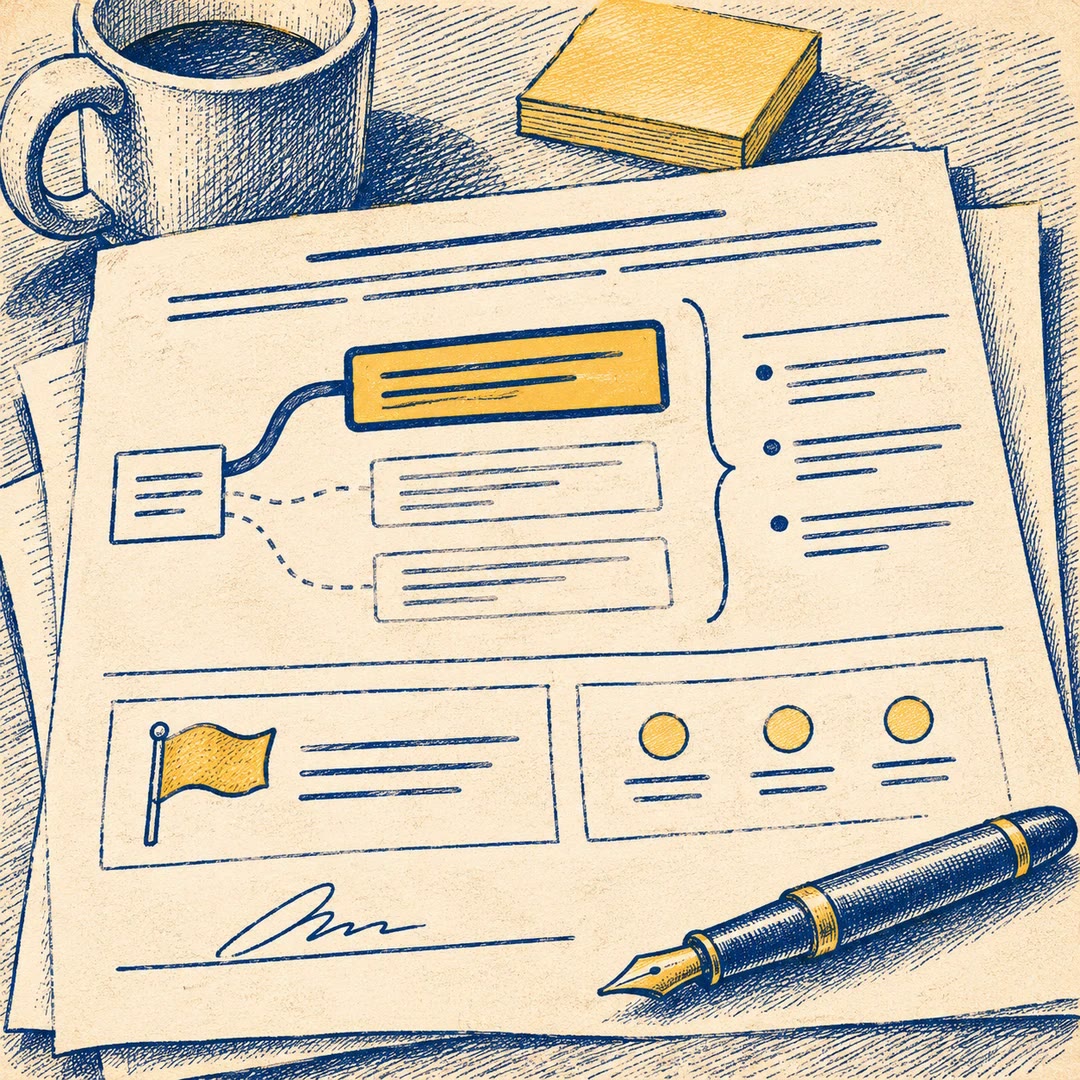
Compare options with AI by making the decision criteria visible before choosing a winner. The decision-doc skill turns your work options, constraints and evidence into a document with weighted scores, trade-offs and an explained recommendation.
The result also names a condition that would change the choice. Scores and confidence remain heuristic judgments, rather than forecasts or calibrated probabilities. A high total can guide discussion, while a decisive constraint or new evidence may still outweigh it.
What it does
- Define criteria for a tool or workflow choice
- Agree weights before comparing totals
- Build an explained option matrix
- Record advantages and costs together
- Identify a condition for revisiting the decision
- Keep the final choice with the decision owner
Install and use
- Load the instruction and licence in a compatible agent. Prepare at least two options, the decision goal, constraints and available evidence; no separate application or shell is required.
- Ask: “Compare these three task tools for our small team. Monthly cost, export options and learning time matter most.”
- Review criteria, weights and the reason for each score. Check the weighted calculations and ask it to distinguish unsupported assumptions.
- Save the recommendation, trade-offs and flip condition. For an important choice, reverse the option order and inspect whether the reasoning stays stable.
FAQ
Source
Made by RBL Industries LLC. Original skill: decision-doc, published on GitHub under the MIT licence.
View on GitHubRelated products
- SkillNew
Review startup claim evidence with AI
Trace important startup claims to supplied evidence, preserve conflicting sources and prepare a register of gaps and follow-up questions.
Free - SkillNew
Write product decision documents with AI
Record a product choice, its alternatives and evidence, including what would reverse the decision and who needs to agree.
Free - SkillNew
Critique product plans with AI
Pressure-test a product plan by exposing its riskiest assumption, strongest objection and realistic alternatives, with findings anchored to the document.
Free