Build retro game audio with AI
Plan a whole retro-style game sound system with a limited voice budget, event priorities and an optional looping score.
Build retro game audio with AI when music, effects and warnings must share a deliberately small sound budget. A maze game might reserve two voices for music but need its last few seconds to sound unmistakably urgent. The building-era-authentic-game-audio workflow helps an agent define a hardware-inspired profile, choose which cues compete and decide what a busy moment is allowed to silence.
Compose for that constraint from the start. A simple motif with space between notes can leave room for the main interaction without raising the entire mix. Test a collision of sounds at the same scheduler tick and listen to the loop transition. A silent test adapter can confirm the chosen priority; it cannot tell you whether the warning is pleasant to hear.
What it does
- Choose an era-inspired hardware profile and simultaneous voice limit.
- Decide whether a scene needs music, event rhythm or silence.
- Write a short motif that leaves room for recurring player actions.
- Set priority rules for a warning that coincides with a less important cue.
- Check loop boundaries and listen to the busiest part of a level.
Install and use
- Start with the project’s audio layer and an appropriate local playback environment. Node is optional for the supplied manifest checker.
- Describe the style, voice limit and the game events that must take precedence.
- Check simultaneous events and audition the final mix at the point of greatest activity.
FAQ
Source
Made by abagames. Original skill: building-era-authentic-game-audio, published on GitHub under the MIT licence.
View on GitHubRelated products
- SkillNew
Track album progress with AI
Review track status, workflow stages and blockers in a structured text report
Free - SkillNew
Write music prompts with AI
Shape a musical brief into a prompt for the chosen generator, placing style, lyrics and section cues in the appropriate fields.
Free - SkillNew
Practise guitar tabs with AI
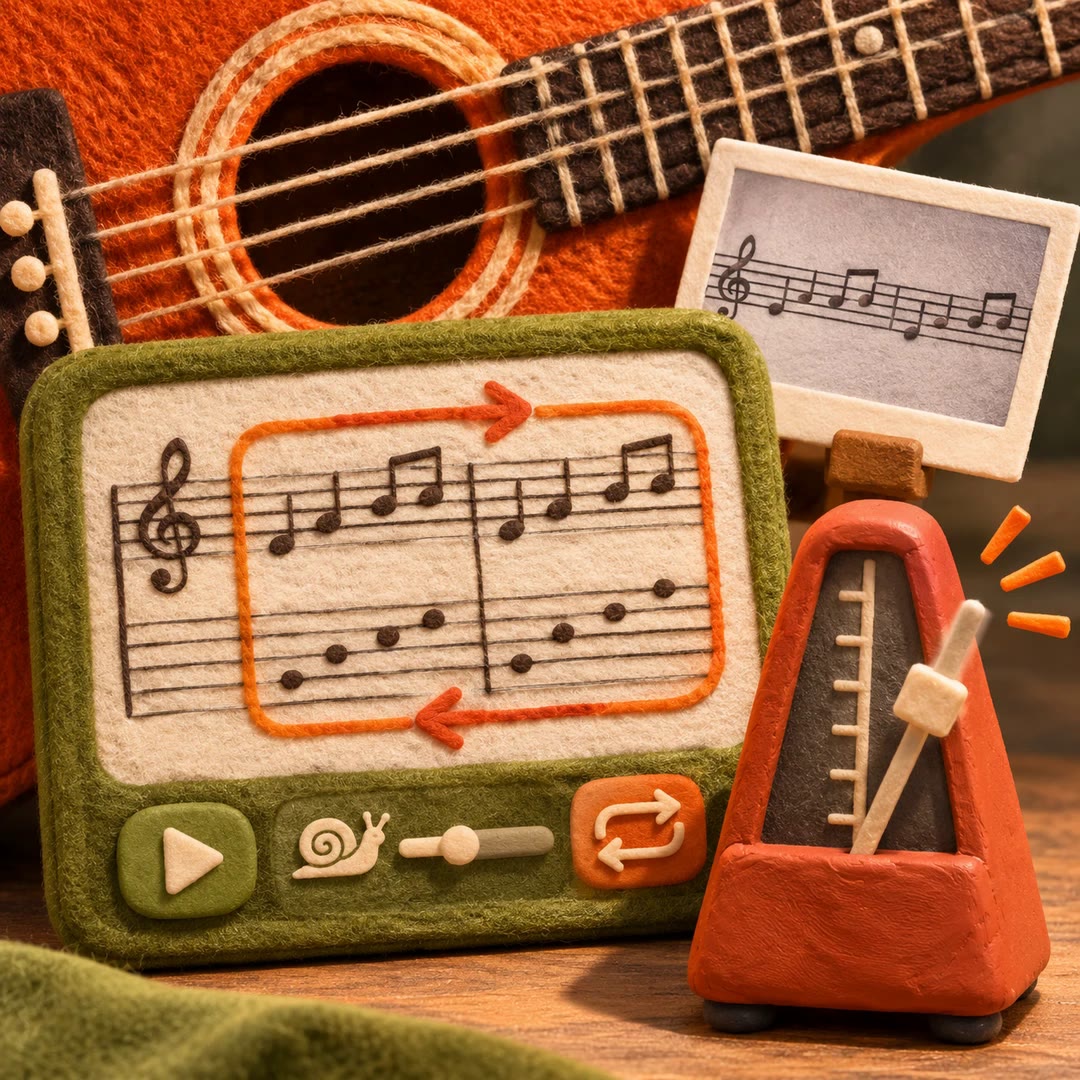
Turn a guitar score into an interactive practice page with slower playback, selected-bar loops and a source image for checking the transcription.
Free