Design website page transitions with AI
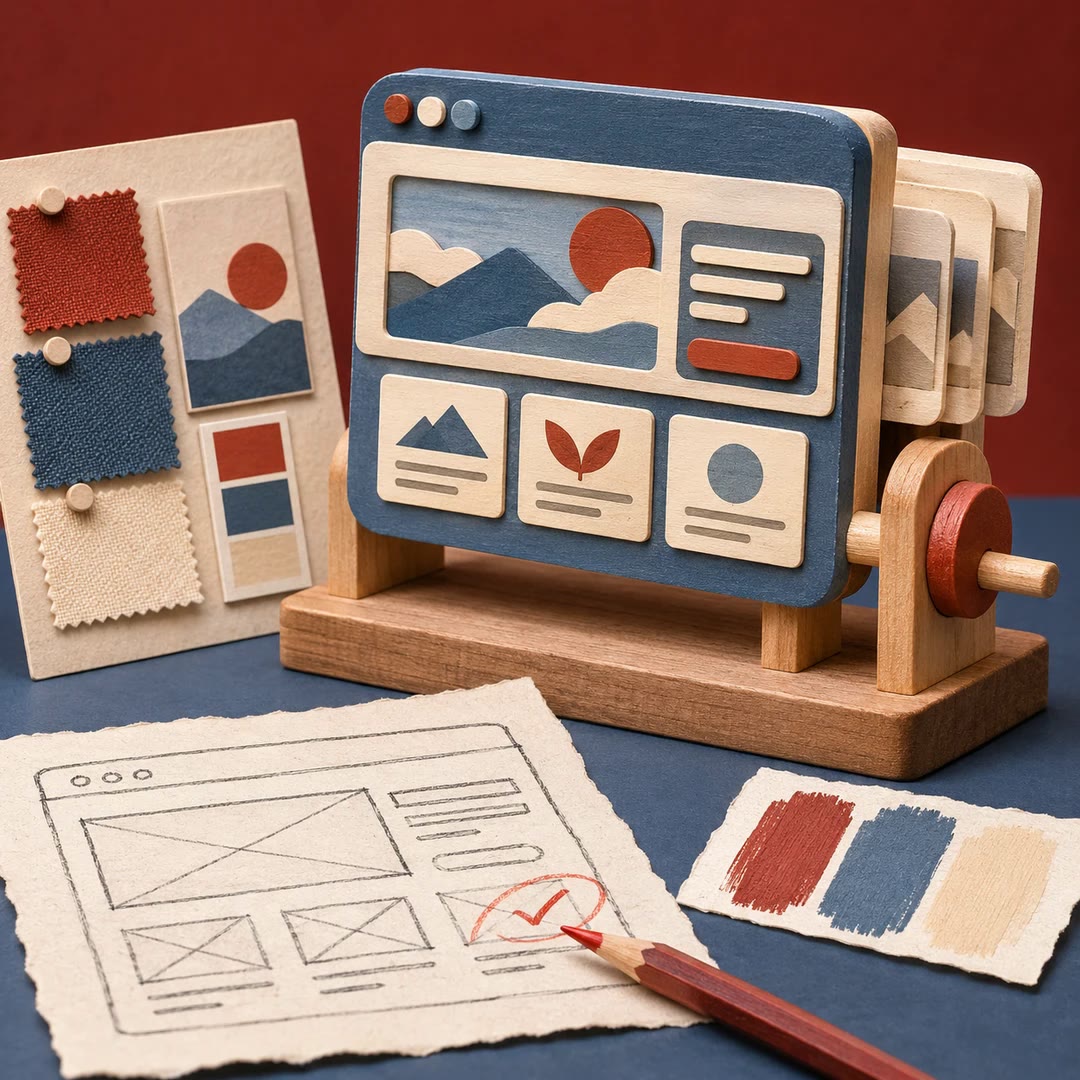
Choose how a list becomes a detail view, how the return trip feels and which parts of the interface stay still throughout.
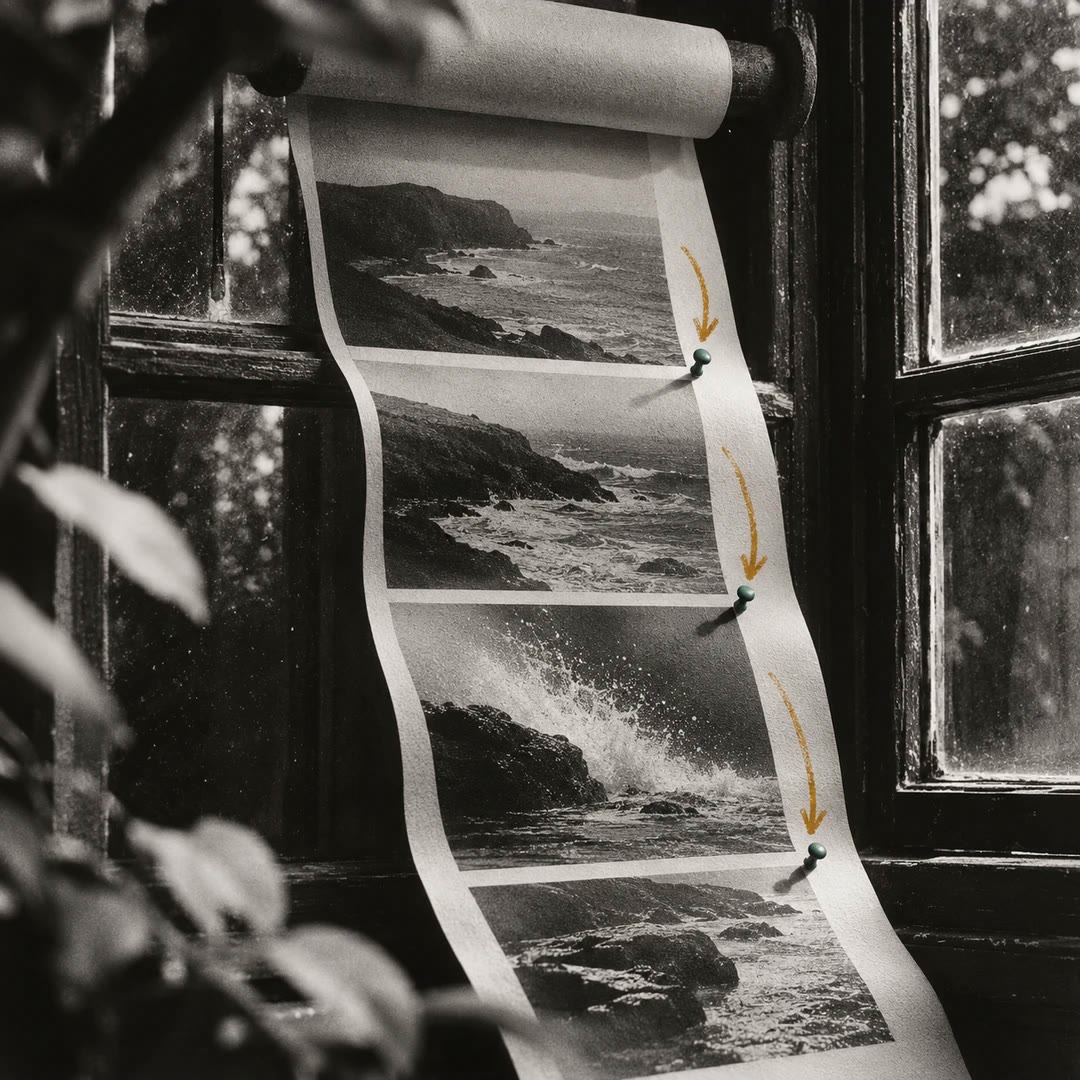
Design website page transitions with AI by starting with a journey someone actually takes. A gallery visitor opens a photograph, reads its caption, then returns to choose another picture. The page-transitions skill helps the agent decide whether the photograph should carry across the change or whether a short fade would keep the sequence clear enough.
Treat the content and the surrounding navigation separately. A fixed gallery header can stay in place while a photograph takes over the content area. For a sheet opened over that photograph, movement from the lower edge tells a different story. Each choice needs a corresponding exit and a way through for people who prefer less motion.
What it does
- Sketch a forward and reverse transition for a list and a detail page.
- Keep a shared image recognisable across a change of view.
- Compare a crossfade with a directional slide for the same journey.
- Set different timings for a sheet entering and leaving the screen.
- Provide an immediate state change when reduced motion is enabled.
Install and use
- Install the skill in a coding agent, open the authorised interface project and use a browser for preview.
- Ask, “When someone opens a gallery picture, keep the image visible, leave the header still and show me what happens on Back.”
- Try both directions on a phone. If the implementation uses the browser’s View Transitions API, also check ordinary navigation where the feature is unavailable.
FAQ
Source
Made by Dylan Tarre. Original skill: page-transitions, published on GitHub under the MIT licence.
View on GitHubRelated products
- SkillNew
Design a web interface with AI
Coordinate page structure, visual direction and review of the running result
Free - SkillNew
Design scroll-driven websites with AI
Plan a visitor journey, build a real HTML page with varied scroll behaviours and check intermediate positions, mobile layouts and reduced motion.
Free - SkillNew
Improve website speed with AI
Review fonts, images and delivery costs against explicit page budgets, then record measured results and explain any remaining performance trade-offs.
Free